Once again I promise you, though it means suffering unto death, I wish to spend my life here, in this place I have chosen, to be used of you. May God help me... — George Leslie MacKay
MacKay’s Story — A Model of the “Burning Yet Not Consumed” Spirit
Dr. George Leslie MacKay’s lifelong motto, “Better to burn out than to rust out,” was derived from the spirit of “burning yet not consumed.” The phrase expresses two possible ways of living: one is to allow life to fade away with age, accomplishing nothing, like raw iron rusting when exposed to air; the other is to let one’s life burn for a specific purpose—consuming oneself, sacrificing oneself—yet creating immeasurable value through that offering. This is precisely the spirit shown in the burning bush, and it is the best description of MacKay’s entire life.
Dr. MacKay graduated from Princeton Theological Seminary in 1870.
On March 9, 1872, he landed at the mouth of the Tamsui River, and on April 7 wrote in his diary: “Once again I pledge myself to You. Though it may mean suffering unto death, my whole life shall be spent here... sent and used by You. May God help me.” At that time, MacKay faced several intense battles:
Threats from the Natural Environment
In early Taiwan, medical care and sanitation were underdeveloped. Epidemics such as typhoid, cholera, and malaria were widespread. MacKay himself suffered from malaria, measles, and chickenpox on different occasions. In 1878, while inspecting churches in Xindian, he contracted chickenpox and fell into a coma for several days. The harsh living conditions brought him tremendous hardship.
Hostility Toward Foreigners
As early as the Ming Dynasty, Han settlers called the Dutch “red‑haired barbarians.” “Red hair” referred to their hair color, and “barbarian” implied being uncivilized. Terms like “barbarian religion,” “barbarian fire,” and “red‑haired soil” carried similar meanings. When MacKay first arrived in Taiwan, he was called the “bearded barbarian.” Although he diligently learned Taiwanese and adapted his clothing and lifestyle to local customs, he was still frequently rejected by the people. During the Sino‑French War (1884) and the Sino‑Japanese War (1895), locals suspected MacKay of colluding with foreign armies. Whenever warships fired toward the shore, angry mobs would vent their fear and frustration by destroying churches or attacking believers.
Resistance to Christianity
Taiwan, frequently struck by typhoons and earthquakes, had long practiced polytheistic folk religion for protection. In a society shaped by “seven parts Taoism, two parts Buddhism, and one part Confucianism,” MacKay’s attempt to proclaim belief in the “one true God” was met with strong resistance. In 1872, officials in Bangka issued a notice prohibiting residents from renting houses to foreigners for missionary purposes. Local power groups were also hostile. Leaders of Bangka’s three major clans once declared, “If the three clans exist, there will be no Jesus religion; if the Jesus religion exists, the three clans will not.” This statement reflected their determination to oppose Christianity at all costs.
Despite decades of suspicion, rejection, and hostility, Dr. MacKay never resented the Taiwanese people. Instead, throughout his 30‑plus years of hardship, he compassionately observed the suffering and needs of the people and willingly burned himself for those who persecuted him. His contributions to Taiwan can be seen in several areas:
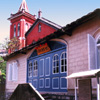 Hobe Mackay Clinic
Medical Contributions
Soon after arriving, MacKay began providing medical care on June 1, relieving countless people of pain. The Tamsui MacKay Clinic he established became northern Taiwan’s first Western‑style hospital. For more than 120 years, it has saved innumerable lives and souls.
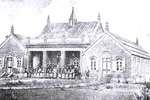 Women’s Academy
Educational Contributions
MacKay introduced modern scientific education, founded schools, and trained local talent. Most importantly, he fought against the inequality experienced by women in education. He founded girls’ schools, providing free meals, clothing, and even travel expenses, encouraging girls—often thought to embody the saying “a woman’s virtue lies in lack of talent”—to pursue learning. Today, Taiwan Seminary, Aletheia University, and Tamkang High School all share deep historical connections to MacKay’s educational work.
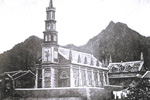 Presbyterian Church
Religious Contributions
MacKay founded approximately 60 churches. Today, most Presbyterian churches north of the Zhuoshui River and along Taiwan’s east coast trace their origins to churches he planted.
Remarkably, the same clan leaders who once vowed, “If the three clans exist, there will be no Jesus religion,” gave MacKay a grand farewell in 1893 when he returned to Canada to report. A marching band led the procession, followed by local leaders, military and civil officials, and three large red parasols covered in handwritten signatures. Behind MacKay’s sedan chair came 26 additional sedan chairs and 300 infantry soldiers. After circling the city, they escorted him back to Tamsui in a magnificent display of respect. Even Wu Ting‑Fang, a scholar who had once torn down one of MacKay’s churches, later became his student.